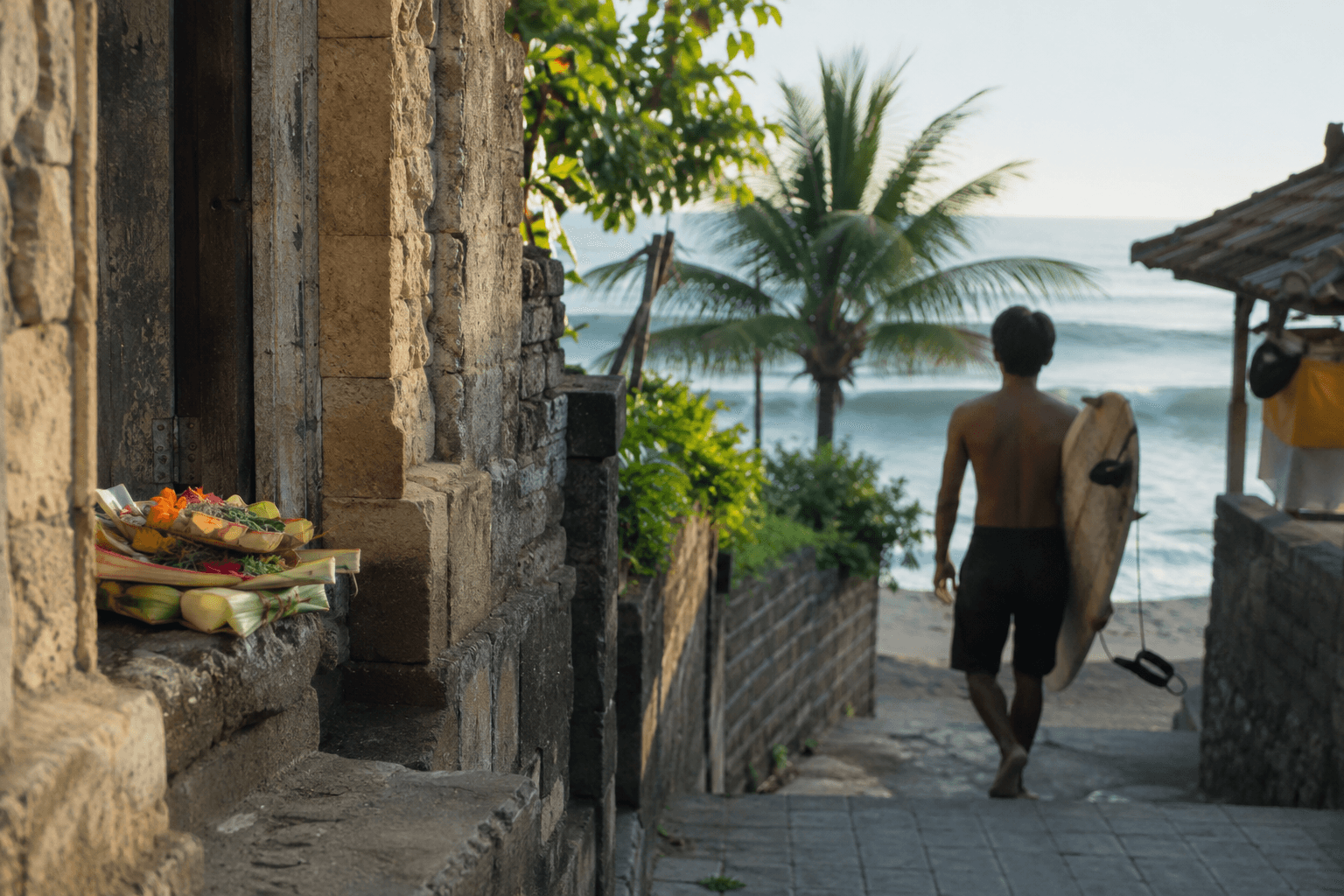
Sumbawa’s coast: surf travel with respect
Remote roads, village economies, and the quieter courtesies that matter around Sumbawa’s surf coast.

Practical guide
8 min readUpdated 3 Sept 2026Ombak Editorial01
Travel farther, assume less
Sumbawa’s surf zones can feel remote because distances are real, services are thinner, and the coastline is less built around visitors. That does not make it empty. Villages, farms, fishing grounds, and family businesses shape the road to every break — arrive prepared, patient, and ready to adapt to local rhythms.
02
Different coasts, different contexts
Sumbawa is not culturally uniform. Customs, language, and everyday pace vary across the island, so avoid treating one surf base as a guide to everywhere else. Ask your host how to behave in the area you are visiting, especially around village events, places of worship, and family compounds.
03
Dress and behaviour away from the beach
Bring a simple cover-up for shops, village roads, meals, and transfers. Swimwear belongs at the beach; modest dress and low-key behaviour make a clearer first impression in communities that are not built around resort life. Keep public drinking and loud late-night behaviour out of the picture.
04
Support the coast that hosts you
Use locally run accommodation, food stalls, transport, and repairs where possible. Confirm prices and travel plans early, pay as agreed, and buy supplies before heading to more isolated stretches. This keeps your own trip smoother while sending more value through the places that make access possible.
05
Surf access is shared access
Do not block lanes, boat ramps, or beach paths with boards and scooters. Keep reef cuts, rubbish, and damaged equipment off the sand; take waste back to a place that can handle it. The best sign that a visitor understood Sumbawa is that the coast is no harder to use after they leave.